What's the best way to water my trees in Inglewood?
This is probably the most common question I get, and it's a good one, especially with our dry climate. Forget those quick sprinkles; they don't do much good. What your trees really need is deep, infrequent watering. Think about it like this: you want the water to soak down to the root zone, not just wet the surface. For mature trees, I recommend slow-soaking for several hours, maybe once every 2-4 weeks during the dry season, depending on the tree species and soil type. New trees need more frequent, but still deep, watering. Use a soaker hose or a drip irrigation system. If you're hand-watering, let the hose trickle for a good while. The goal is to get water 12-18 inches deep. You can check this by sticking a screwdriver into the soil; if it goes in easily, you're doing it right. Our clay soil here in Inglewood can be tricky because it holds water well but can also get compacted, so slow and steady is key to avoid runoff.
When should I prune my trees, and why is it important?
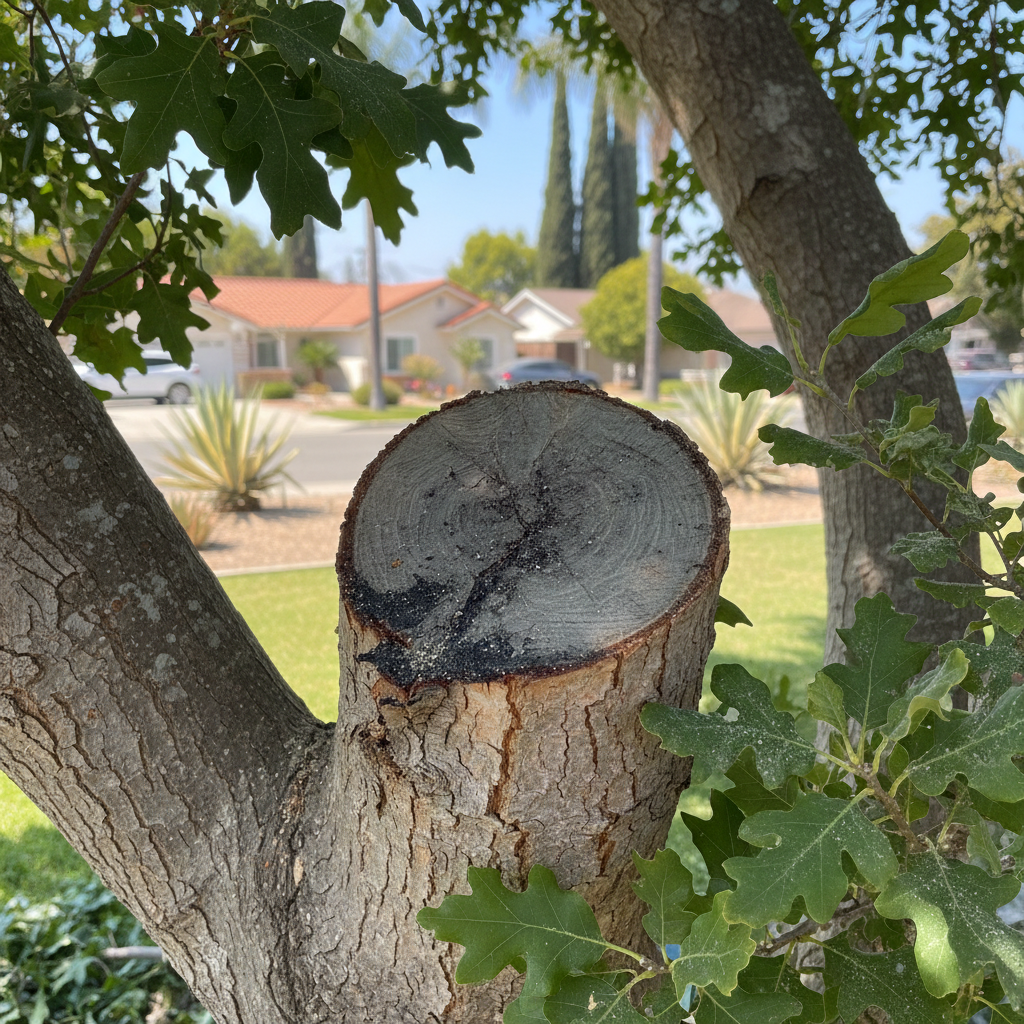
Pruning is essential for a tree's health, safety, and appearance. The 'when' depends on the 'why.' Generally, for most deciduous trees, late winter or early spring, when they're dormant, is ideal. That's when you can see the structure best and minimize stress. For flowering trees, you usually prune after they've bloomed. Dead, diseased, or damaged branches can and should be removed any time of year – that's called 'hazard pruning' or 'corrective pruning.' We do a lot of that here at Oasis Tree. Pruning helps improve air circulation, removes weak or crossing branches that could cause problems, encourages strong growth, and can even help fruit production. Don't just hack away, though; proper pruning involves understanding tree biology, making clean cuts at the right spots, and knowing what to remove and what to leave. Bad pruning can do more harm than good.
My tree looks sick. How can I tell what's wrong, and what should I do?
Trees can't tell us they're sick, so you've got to be a detective. Look for changes: leaves turning yellow or brown prematurely, wilting, stunted growth, unusual spots on leaves, sap oozing, or bark peeling. Sometimes you'll see small holes in the trunk, which could be borers. Fungal growths like mushrooms at the base of the tree can indicate root rot. Our hot summers can sometimes stress trees, making them more susceptible to pests and diseases. If you notice something off, the first step is to identify the symptoms. You can try looking up common tree diseases in Southern California, but honestly, it's often best to call in a professional. We can diagnose the issue, whether it's a pest infestation, a fungal disease, or simply environmental stress, and then recommend the right treatment. Don't wait too long; early intervention can save your tree.
Do I need to fertilize my trees? If so, what kind and how often?
Not all trees need fertilizing, especially if they're established and growing well in decent soil. Over-fertilizing can actually be harmful. However, if your tree is showing signs of nutrient deficiency – like pale leaves, slow growth, or small leaves – then fertilization might be beneficial. The best way to know for sure is to get a soil test. This tells you exactly what nutrients your soil is lacking. Without a soil test, you're just guessing. If you do fertilize, use a slow-release granular fertilizer formulated for trees, or consider a deep-root feeding service. Apply it in late fall or early spring. For most established trees in our area, a balanced fertilizer (like a 10-10-10 or similar) applied every few years might be sufficient if a test indicates a need. Young trees might benefit from a lighter application to encourage establishment.
What's the deal with tree roots and my foundation/pipes?
Ah, the classic root dilemma. Tree roots are always searching for water and nutrients, and unfortunately, leaky pipes or the consistent moisture around a foundation can be very attractive. Aggressive tree roots, especially from species like Ficus or certain types of Sycamore, can definitely cause issues. They can crack foundations, lift sidewalks, and invade sewer lines. It's a real problem in older neighborhoods with mature trees. The best defense is prevention: plant the right tree in the right place. Know the mature size and root habits of any tree you plant. If you already have a problem, sometimes root barriers can help, but they're not a magic bullet. For pipe issues, regular hydro-jetting can keep roots at bay, but if it's a constant battle, you might need to consider pipe repair or even tree removal as a last resort. We can assess the situation and give you an honest opinion on the best course of action.
How often should I have my trees professionally inspected?
For most healthy, mature trees, I'd say an annual or biennial inspection is a good idea. Think of it like a check-up for your car. A professional arborist can spot potential problems that you might miss – things like subtle signs of disease, insect infestations, structural weaknesses, or branches that could become hazards. After a big storm, it's definitely a good time for an inspection to check for hidden damage. Young trees might benefit from more frequent checks to ensure they're establishing properly. If you have any concerns about a tree's health, stability, or if it's near structures or power lines, don't hesitate to call us at Oasis Tree. Proactive care is always cheaper and safer than reactive emergency work.
Are there any trees I shouldn't plant in Inglewood?
Absolutely. While there are many beautiful trees that thrive here, some are just not suited for our climate, soil, or urban environment. For example, some fast-growing trees have weak wood and are prone to breaking, which can be a real hazard in a windstorm. Others have extremely aggressive root systems that will wreak havoc on your hardscaping and plumbing. We also have to consider water usage; drought-tolerant options are always a plus. Invasive species are another no-go; they can outcompete native plants and disrupt our local ecosystem. I'd generally steer clear of trees like the Ficus (especially the Indian Laurel Fig) near foundations or pipes, or certain types of eucalyptus that can drop large limbs unexpectedly. Always research a tree's mature size, root system, and water needs before planting. A little planning goes a long way to avoid future headaches.