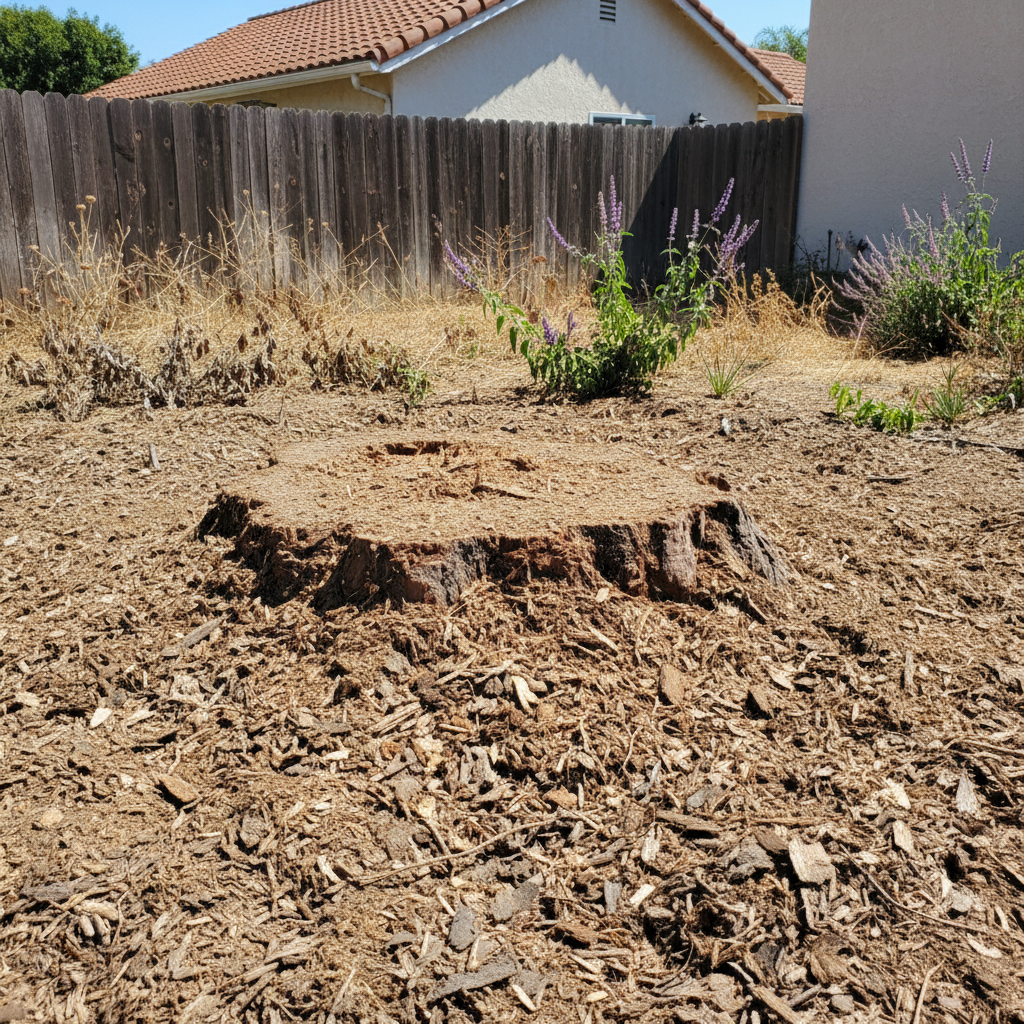
Alright, let's talk about those stubborn tree stumps. You've had a tree taken down, or maybe one just gave up the ghost, and now you're left with this big, ugly reminder in your yard. What do you do with it? This isn't just about aesthetics; that stump can be a tripping hazard, attract pests, or just get in the way of your landscaping dreams.
There are two main ways to deal with a stump: grinding it down or removing it completely. A lot of folks use those terms interchangeably, but they're pretty different projects. Knowing the difference will help you decide what's right for your property here in Inglewood.
Stump Grinding: The Quick Fix
Stump grinding is exactly what it sounds like. We use a specialized machine with a rotating cutting wheel to chip away at the stump, grinding it down into wood chips. The goal is to get it below ground level, usually 6 to 12 inches deep. This leaves you with a hole filled with wood chips and dirt, which you can then fill with topsoil and plant grass, flowers, or even a new small tree.
Here's why grinding is often the go-to:
- It's faster: A professional can usually grind a stump in an hour or two, depending on its size.
- Less invasive: The machine is pretty compact, so it doesn't tear up your whole yard. This is a big plus if you've got a tight space or don't want to mess up your existing landscaping.
- More affordable: Generally, grinding costs less than full removal because it requires less labor and specialized equipment.
- DIY potential: For smaller stumps, you can rent a grinder. But be warned, these machines are heavy, powerful, and can be dangerous if you don't know what you're doing. I've seen more than a few homeowners get into trouble trying to save a buck.
If you're thinking about renting a grinder, make sure you know what you're getting into. Those things kick back hard, and hitting a rock or a piece of metal buried in the stump can be a real problem. Also, remember to call 811 before you dig or grind to mark any underground utilities. You don't want to hit a water line or, worse, an electrical conduit, especially with how many older homes in Inglewood have shallow utility lines.
Stump Removal: Getting Rid of It All
Full stump removal means exactly that: getting the entire stump and as much of the root system as possible out of the ground. This usually involves heavy machinery like an excavator or a lot of manual labor with picks, shovels, and root saws.
Why would you go this route?
- Building or Paving: If you're planning to build a new structure, pour concrete for a patio, or lay down a driveway right where the stump is, you'll need it completely gone. Any leftover wood can decompose and cause settling issues down the line.
- New Tree Planting: If you want to plant a new, large tree in the exact same spot, removing the old root ball gives the new tree the best chance to establish its own root system without competition or disease from the old one.
- Disease Concerns: If the original tree died from a disease that could spread to other plants, removing the entire stump and roots helps eliminate the source.
Full removal is a much bigger job. It's more expensive, takes longer, and can leave a much larger crater in your yard. This isn't a DIY project for your average homeowner, trust me. You're talking about serious excavation and heavy lifting. You'll definitely need a pro for this one.
Before the Project: What You Need to Know
No matter if you're grinding or removing, a few things are always true:
- Know Your Stump: How big is it? What kind of tree was it? Some hardwoods are tougher to grind than softwoods.
- Underground Utilities: I already mentioned this, but it bears repeating: CALL 811! It's free, it's the law, and it could save your life or your wallet.
- Access: Can a grinding machine or excavator easily get to the stump? Sometimes fences, gates, or narrow side yards in older Inglewood neighborhoods can make access tricky.
- What's Next?: What do you plan to do with the area after the stump is gone? This will heavily influence your decision between grinding and removal.
During and After the Project
If you hire a pro like us at Oasis Tree, we'll handle all the heavy lifting, literally. We'll bring the right equipment, make sure the area is safe, and get the job done efficiently. After grinding, you'll have a pile of wood chips. You can use these as mulch in your garden, or we can haul them away for you. If it's a full removal, you'll have a big hole that needs to be filled with fresh soil and compacted properly.
For grinding, the remaining roots will eventually decompose naturally. This can take years, but they usually won't cause issues unless they're very large and close to a foundation or pipe. For full removal, you've got a clean slate.
So, there you have it. Most of the time, grinding is sufficient for homeowners who just want to reclaim their yard space. But if you're building or planting a new tree in the exact spot, full removal is the way to go. Don't hesitate to give us a call at Oasis Tree if you're unsure. We're happy to come out, take a look, and give you an honest opinion on the best approach for your specific situation.